E-Bike Pedal Assist Not Working: Safe Checks Before Repair
Quick answer
If the display turns on but pedal assist never starts, first check that assist is not set to OFF, that you are pedalling below the assist cut-off speed, and that the battery is charged and fully seated. Restart without pressing on the pedals. Next, make sure both brake levers return fully, and look at the visible sensor and magnet, using your own manual. If a fault code stays, the wiring is damaged, or these checks do not help, stop and contact the seller or an authorised service centre.
This guide is for one problem: the bike powers up, but assist does not work from the start of the ride. Other problems have their own guides:
- Assist works, then keeps stopping: read what to check when the motor cuts out.
- The display shows a code: read what e-bike error codes mean.
- The battery will not charge: read the battery charging fix guide.
How this guide was made: We used owner and service documents from Shimano, Bosch, Rad Power Bikes and Tern, plus guidance from specialists EM3ev and Velo de Ville. We checked them on 3 November 2026. IonicRide did not test these steps on a bike. Bike designs differ, so your own manual comes first. Failure rates were not available, so we do not say which fault is most common.
Step 1: Check the simple causes
These checks need no tools. They come mainly from the “assistance is not being provided” table in a copy of a Shimano STEPS manual.
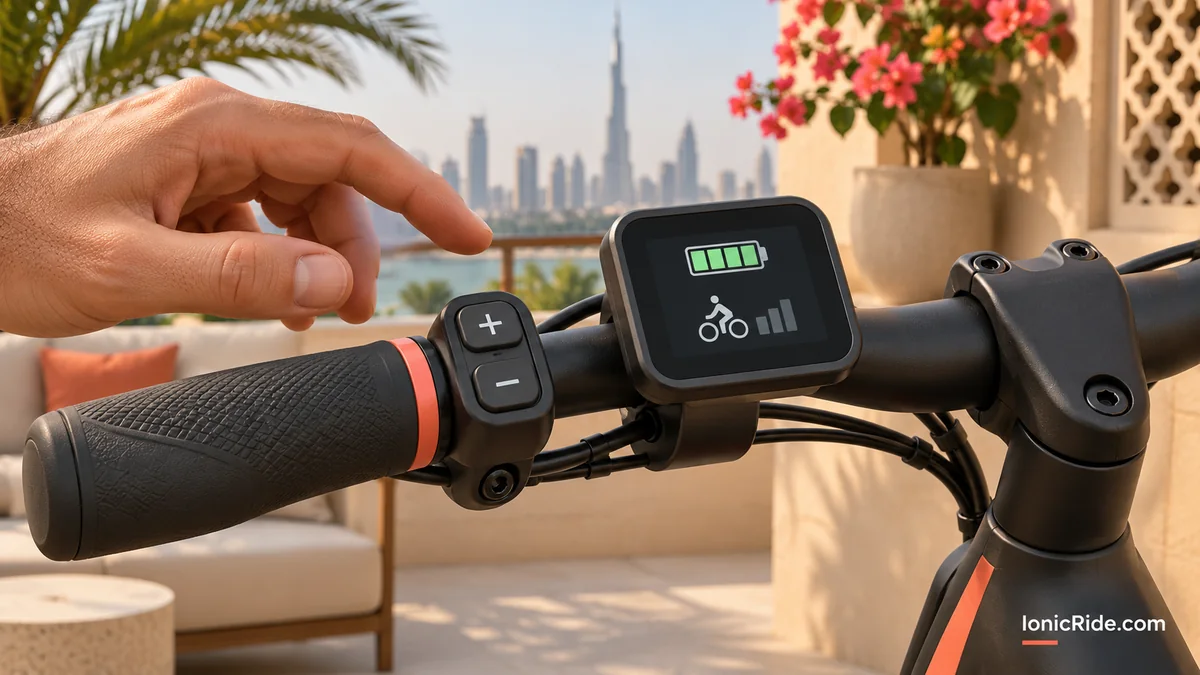
- ☐ Assist level: move it above OFF or 0. Shimano says to choose a mode other than OFF.
- ☐ Pedalling: pedal gently. Shimano reminds riders that the bike is not a motorbike. In a copy of a Bosch manual, the drive starts when you pedal and stops when you stop pedalling.
- ☐ Speed: assist stops at the bike’s set speed. Shimano’s manual gives 25 km/h, while Tern explains that the limit depends on where a bike was sold.
- ☐ Battery: charge it, turn the bike off, then remove and reseat it if your bike has a removable battery.
- ☐ Restart: turn the system off and on. Velo de Ville advises keeping pressure off the pedals during start-up on Bosch and Shimano systems.
- ☐ Heat: Shimano mentions long slopes in summer and long rides with heavy loads. It says to turn the power off, wait and check again. Do this in the shade if the bike has been in the sun.
Step 2: Read what the bike is telling you
Look at the display, the battery lights and any app. Write down any code before you restart the bike. A code can point to a different cause, so do not skip it.
On Bosch systems, for example, Tern says a speed sensor knocked out of place can show Error 503 and disable assist. A Bosch code list hosted by TerraTrike says to restart for code 503, and to contact a dealer if it stays. Codes differ by brand, so never use this meaning for another system.
Step 3: Check the brake levers
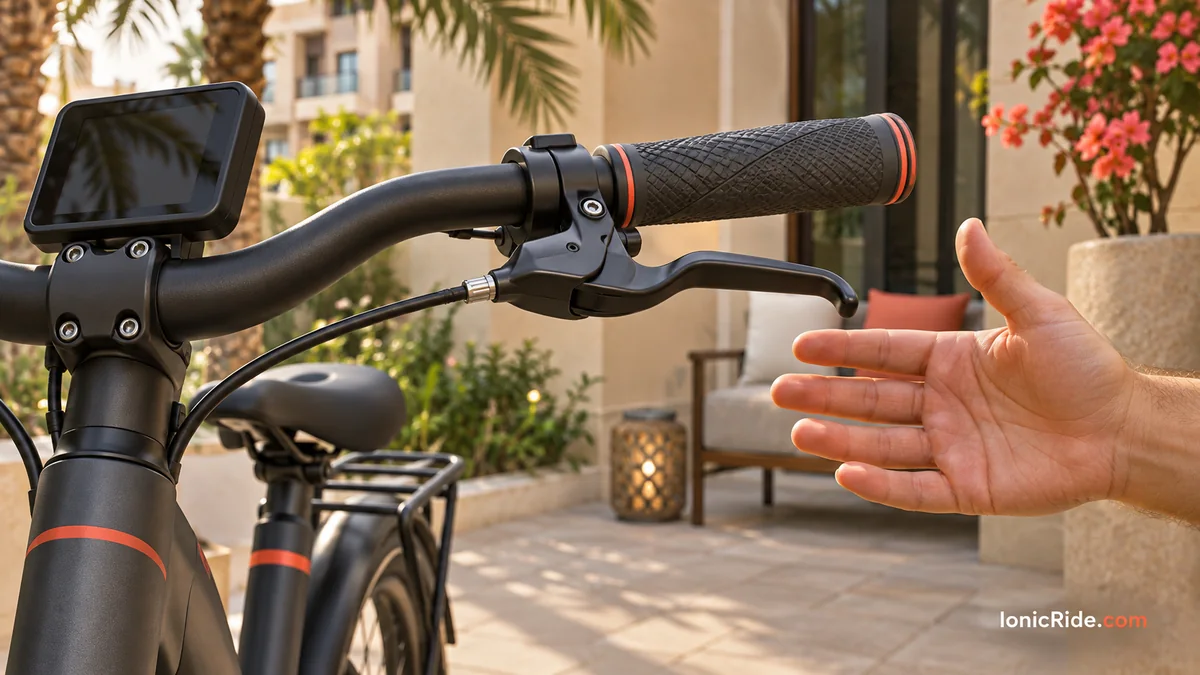
Many e-bikes stop the motor when a brake lever is pulled. If a lever does not return fully, the bike may think you are still braking. EM3ev lists this as a check.
- Turn the bike off.
- Squeeze and release each lever. Each one should return fully without sticking.
- Look for a bent lever or a pinched cable.
- Use your manual for any brake symbol on the display or any approved sensor adjustment.
Do not disconnect or bypass a brake sensor
This removes a safety function. EM3ev warns against bypassing the brake cut-off as a normal repair. If you think a sensor is faulty, leave it connected and have it checked.
Step 4: Find out which sensors your bike uses
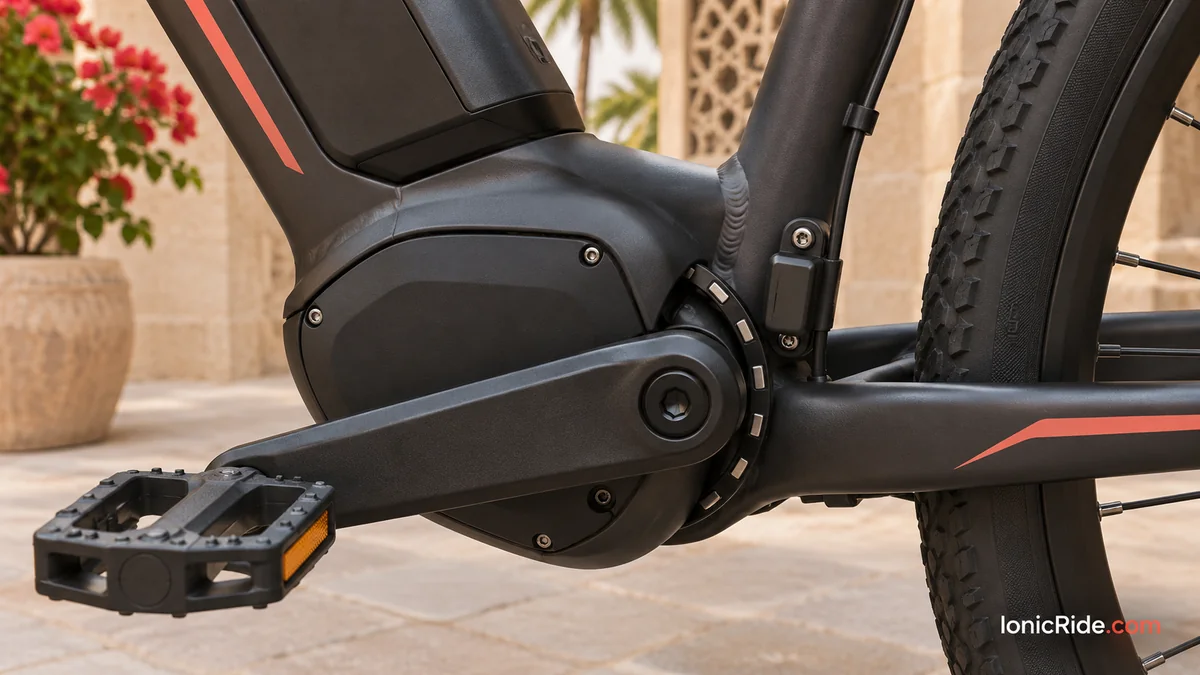
You cannot check a sensor until you know what your bike has. The manual or seller can confirm this. For a full comparison of how they ride, see torque vs cadence sensors.
| Sensor | What it reads | What an owner can usually see | Where to stop |
|---|---|---|---|
| Cadence (magnet ring) | Whether the cranks are turning | On some bikes, a ring behind the crank and a small sensor | A damaged ring, or a connector you cannot reach with the power off |
| Torque | How hard you press the pedals | Often nothing, as it may sit inside the drive system | Do not open the motor or drive unit |
| Speed | How fast the wheel turns | On some bikes, a spoke magnet and frame sensor | A code that stays after the approved check |
The “what an owner can see” and “where to stop” columns are IonicRide’s analysis of the documents above. Layouts differ.
Some systems use several sensors. Tern says Bosch uses torque, cadence and speed readings, and that all three must work.
Step 5: Check alignment only as your manual allows
A magnet can move after wheel work or a knock. Tern says Bosch speed sensor problems can happen after pumping tyres or fixing a flat. The correct gap is not universal, as these documents show:
| Document | Part | Stated gap |
|---|---|---|
| Rad Power Bikes, named models with an external ring | Pedal assist magnet ring and sensor | About 3 mm |
| Bosch BDU490P manual copy | Speed sensor and magnet | 2 to 8 mm |
| Bosch BDU290P manual copy, 2017 | Speed sensor and magnet | 5 to 17 mm |
| Shimano dealer’s manual, EP8, EP6 and EP5 | Speed sensor and magnet | 3 to 17 mm |
Treat this table as proof that you need your own bike’s figure, not as a setting to copy.
If your manual covers the magnet ring
Rad Power Bikes gives a useful example, for its named models only:
- Turn the bike off and remove the battery.
- Check the ring’s distance from the sensor. Rad says to gently push it closer if needed, keeping it square.
- Clean dirt from the ring with a dry or lightly damp towel.
- Inspect the cable and connector for damage, dirt or moisture.
- Rad’s test then uses level 1, with the rear wheel off the ground, while you turn the crank by hand. Do this only if your own manual gives a similar test, and keep clear of the wheel.
Rad tells owners of other models, including RadRunner and RadMission, to contact support instead. Not every bike suits this check.
The Shimano dealer’s manual also says assist may be affected by wrong settings and by a chain that is too tight. Those are service items, so ask the shop to look at them.
What not to do
- Do not unplug or probe connectors while the bike has power. EM3ev warns against probing powered connectors or splicing wires without verified wiring information.
- Do not change controller settings to “see if it helps”. Wrong values can affect assist, speed limits and safety.
- Do not fit a bypass or speed-unlock device. Bosch warns that unauthorised modification can cause death or serious injury.
- Do not open the battery or motor.
Stop riding and get help if:
The motor starts by itself or assist is unpredictable. The wiring is damaged. You notice loud noises, heat or a burning smell. EM3ev and Velo de Ville both tell riders to stop or seek service in cases like these. Do not charge the bike if you suspect battery damage.
What to tell the seller or service centre
Clear details can save a visit and help with a warranty claim. Rad also asks owners to film its checks for support, which is a good habit with any brand.
- ☐ Brand, exact model and purchase date
- ☐ Drive system and display model, if shown
- ☐ Any fault code, with a photo of the display
- ☐ Whether the motor gives any help at any level
- ☐ When it started, and any recent crash, wash, puncture or wheel work
- ☐ Which checks you already did
- ☐ Any parts changed since you bought the bike
- ☐ A short video of the fault, if it is safe to record
Ask for their answer in writing if warranty is involved. Do not open anything first if your warranty terms forbid it.
FAQs
Why does my display work when assist does not?
The display needs power, but assist also depends on your settings, pedal and speed signals, and the drive system. A working screen does not prove that those parts are fine.
Can a bad sensor stop assist with no error code?
It can on some bikes, because not every system reports the same faults. Rad’s guide, for example, uses an LED check at the sensor. Use your manual or support to confirm this for your model.
Can I fix a torque sensor myself?
Treat it as a service job unless your manufacturer gives owner steps. Do not open the motor or drive unit.
Should I keep riding without assist?
Shimano says a bike still works as a normal bicycle with the battery removed. Stop riding if brakes, wiring or the motor seem unsafe, and do not treat this as a fix.
Bottom line
Start with the settings, battery and restart. Then check the brake levers and any visible sensor, using your manual’s figures. Do not bypass anything, and do not open the system. If that does not find the cause, you have done enough, and your notes will help the seller or service centre.
Related guides
Sources
- Shimano STEPS E010 user manual, troubleshooting page (ManualsLib copy)
- Shimano dealer's manual DM-DUE001-04
- Bosch BDU290P owner's manual (hosted copy)
- EM3ev: PAS sensor causes and safe fixes
By Alex at IonicRide. Sources checked 3 November 2026.