Dubai Cycling Rules: Helmets, Lights, Speed Limits and Fines
Quick answer
In Dubai, cyclists must wear a helmet and reflective vest, and the bicycle needs a white front light, red rear light, red rear reflector, bell and front and rear brakes. Stay on permitted lanes and roads, and never ride on a road above 60 km/h. Speed limits differ by track, and fines in the 2022 resolution run from AED 100 to AED 300. No rider’s permit is listed for ordinary pedal bicycles.
This guide covers pedal bicycles in Dubai only. Other emirates have their own rules. E-bikes and e-scooters share some rules but have others of their own, so see the short section below.
How this guide was made: We read Executive Council Resolution 13 of 2022, its implementing bylaw and RTA’s cycling track page on 3 November 2026. The English legal text is a translation, and the Arabic version prevails. This is general information, not legal advice. A federal traffic law from 2024 also covers some light mobility devices, so check for changes.
What your bicycle must have
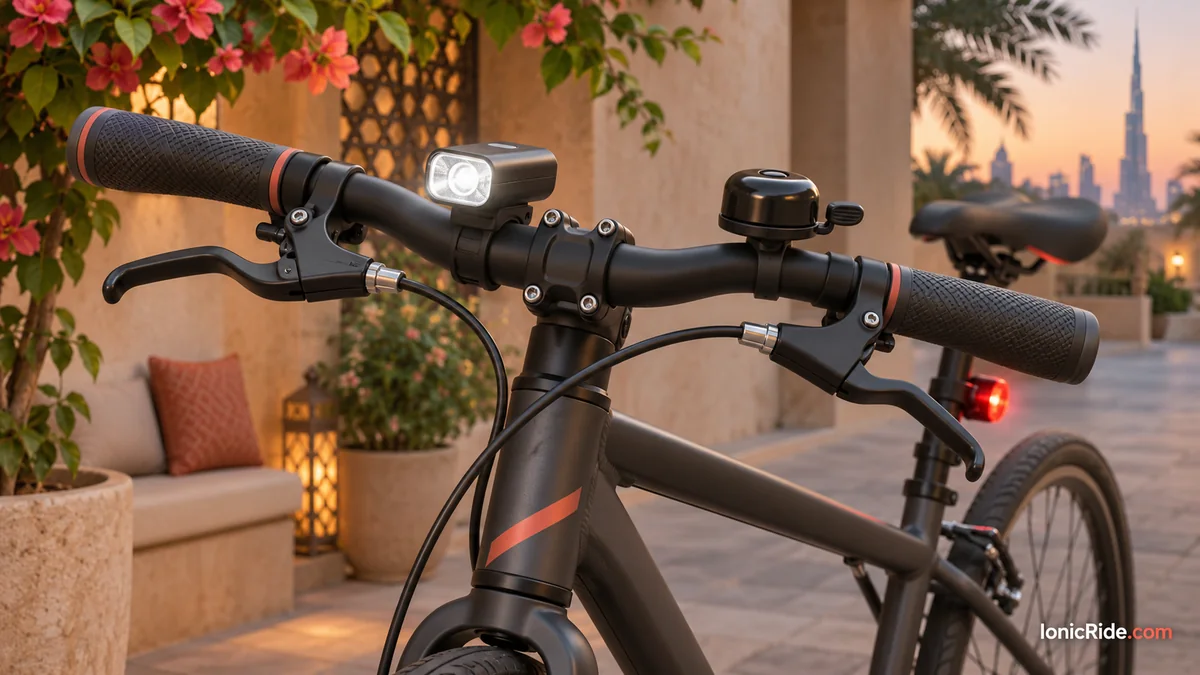
Under Article 5 of the Resolution, a cycle must have:
- A white headlight
- A red tail light and a red rear reflector
- A bell on the handlebar
- Front and rear brakes
- Tyres suitable for the road or cycle lane
- Wheels and an overall size in proportion to the cycle and rider
A new bike may not come with all of these, so check before you ride. The bylaw also requires tyre pressure suited to your road or lane.
What riders must wear and do
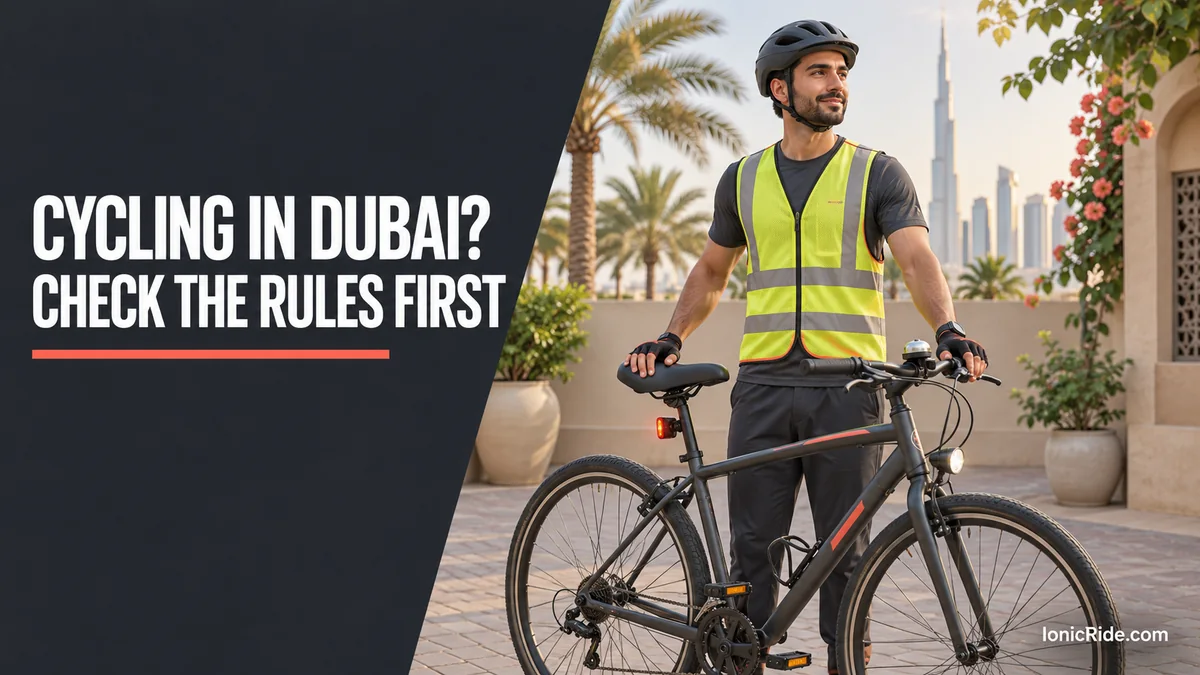
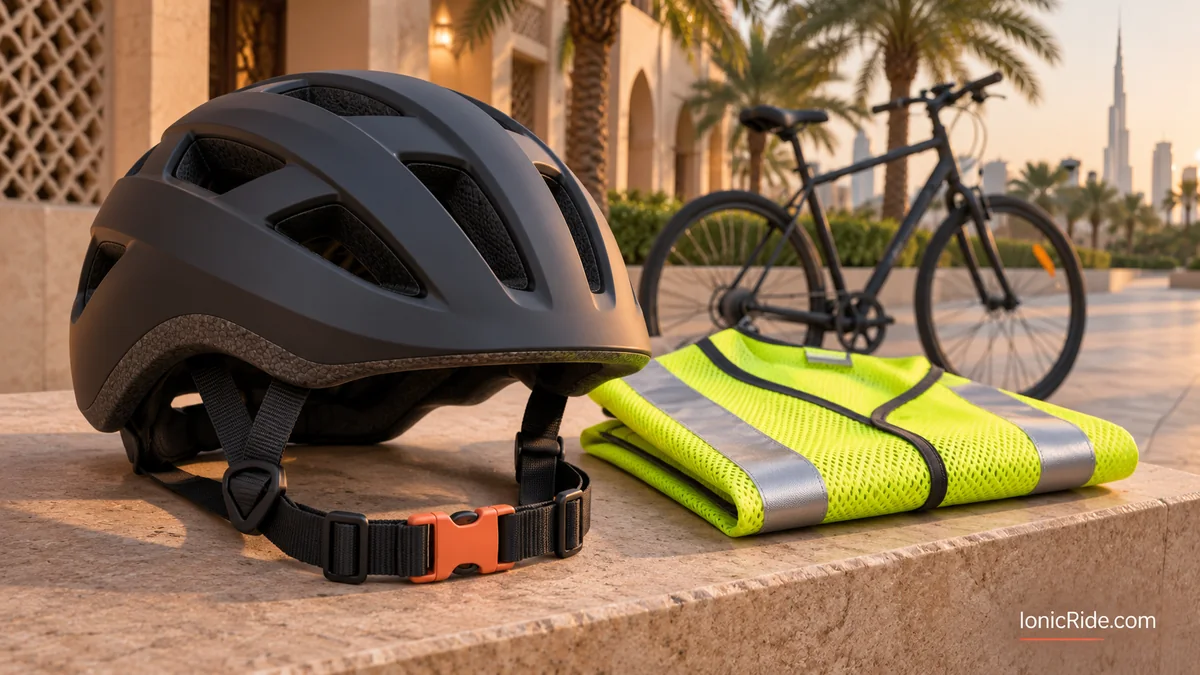
- Helmet and reflective vest: the Resolution lists both as safety requirements. See our helmet guide, which also explains cycling certification.
- Age: children under 12 may ride a pedal cycle only with a cyclist aged at least 18.
- Passengers: allowed only if the bicycle is equipped to carry one, and the passenger wears a helmet and vest.
- Crossings: dismount and walk across pedestrian crossings.
- Safe riding: no zigzagging, riding without hands or holding onto moving vehicles.
- Parking: use designated cycle parking, and do not block others.
- Accidents: report any accident that causes injury or damage.
RTA also advises avoiding dual headsets and wearing bright clothing at night.
Which way should you ride?
Ride with traffic and keep right. The 2022 Resolution says this, and sets an AED 200 fine for riding against traffic. RTA’s track page still says “Ride towards traffic”, and it cites a 2015 resolution that the 2022 Resolution repealed. We follow the newer legal text. We could not find an RTA note explaining the older wording, so also check the signs on each track.
Where you can ride
The bylaw allows pedal cycles on designated cycle lanes, lanes shared with pedestrians, internal roads and byroads with a limit of 60 km/h or less, and designated safe roads, keeping to the right where road riding is allowed.
Not allowed:
- Roads with a speed limit above 60 km/h
- Walking or jogging lanes
- Metro stations and pedestrian bridges, according to RTA. You may walk a bicycle across a bridge.
RTA says foldable bicycles may go on the Metro if folded and kept in the luggage area. Our Metro guide covers the process, including batteries.
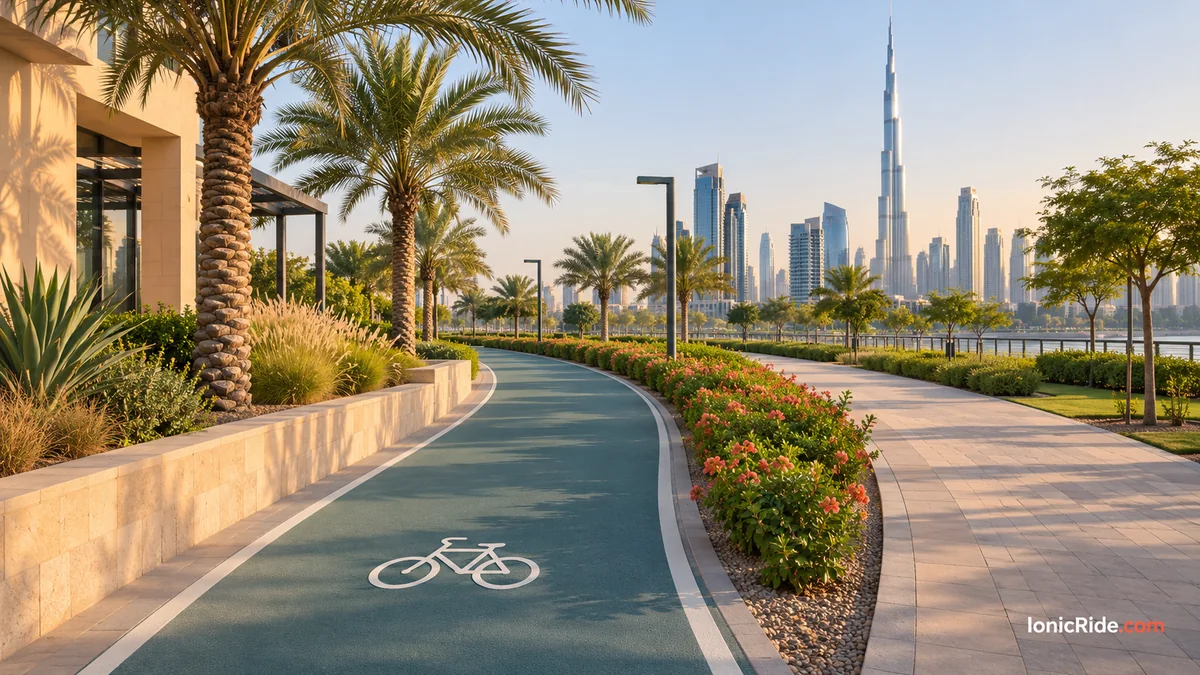
Speed limits by track
| Where | Limit listed by RTA |
|---|---|
| Urban tracks, including those shared with pedestrians | 20 km/h |
| Amateur tracks, such as Al Warqa Square and Nad Al Sheba | 30 km/h |
| Areas shared with vehicles | 30 km/h |
| External training tracks, such as Seih Al Salam and Al Qudra | No set limit, but safety instructions apply |
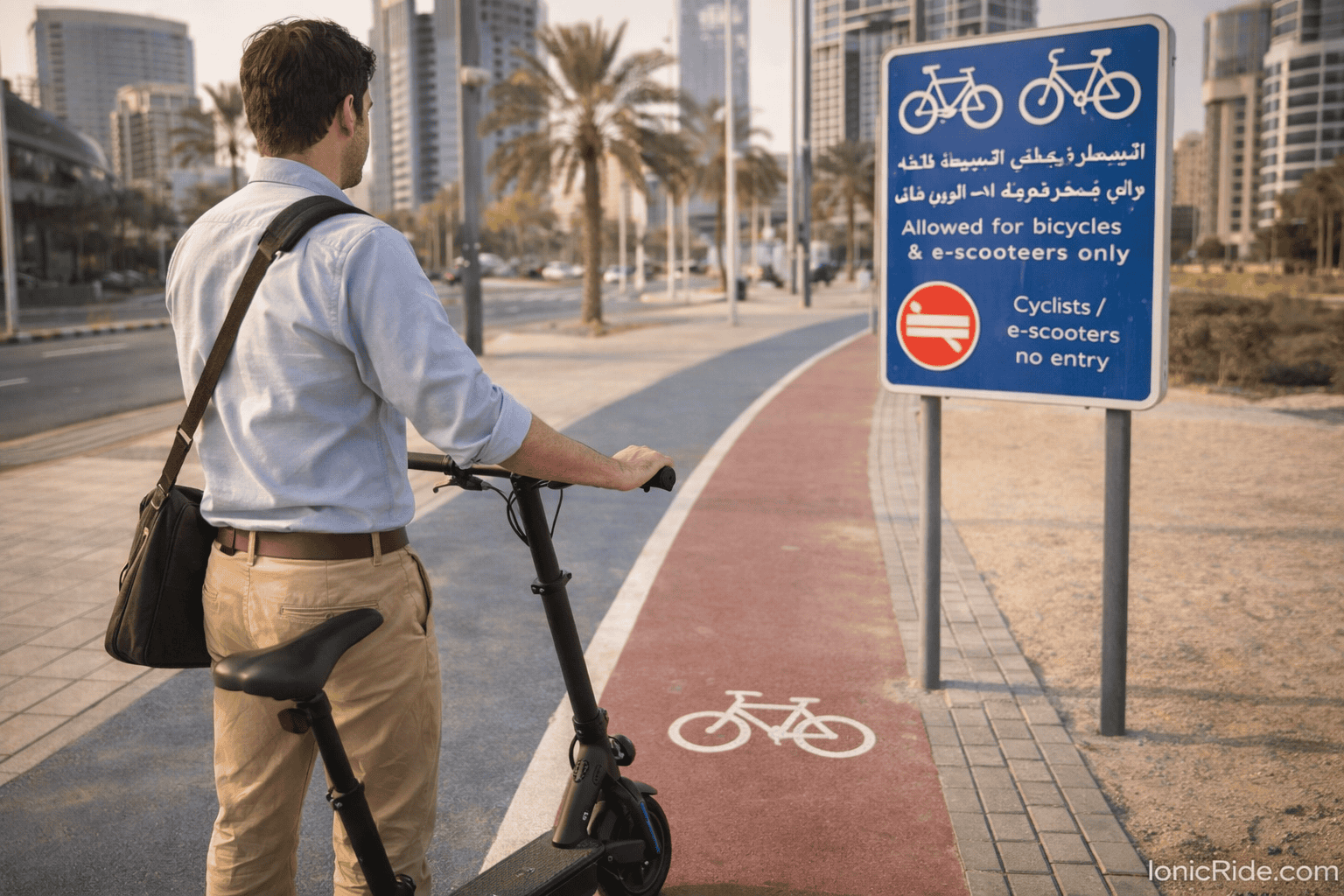
Signs on the track take priority, so follow them if they differ from this table. Some tracks do not allow all devices, so do not assume an e-bike or scooter can follow you.
Fines for pedal cyclists
These amounts come from the schedule in the 2022 Resolution. We list those that can apply to pedal cycles.
| Violation | Fine |
|---|---|
| Exceeding the cycle lane speed limit | AED 100 |
| Riding outside designated cycle lanes | AED 200 |
| Riding or leaving a cycle on a walking or jogging lane | AED 200 |
| No helmet or vest, or carrying a passenger without the required equipment | AED 200 |
| Failing security or safety requirements | AED 200 |
| Improper parking | AED 200 |
| Ignoring information signs | AED 200 |
| Child under 12 riding without an accompanying adult | AED 200 |
| Not dismounting at a pedestrian crossing | AED 200 |
| Using the left side of the road, or changing lanes unsafely | AED 200 |
| Riding against traffic | AED 200 |
| Riding on a road with a limit above 60 km/h | AED 300 |
| Endangering yourself or others | AED 300 |
| Riding a cycle that fails technical requirements | AED 300 |
| Not reporting an accident with injury or damage | AED 300 |
| Towing a cycle or being towed | AED 300 |
Other penalties: if a violation threatens safety and is repeated within a year, RTA may impound the cycle for 30 days, ban the rider for a period, or both. If the rider is under 18, the guardian must pay the fine. The Resolution also sets out group training rules, with an AED 200 per person fine where approval is missing.
Group rides and road training
The Resolution defines group training as four or more cyclists training on roads under a trainer, and it needs RTA approval. Independent training is fewer than four cyclists training on roads without a trainer, and it is prohibited, with an AED 100 per person fine. These terms relate to training on roads, so ask RTA or your club if you are unsure how they apply to your ride.
How e-bikes and e-scooters differ
| Rule | Pedal bicycle | E-bike | E-scooter |
|---|---|---|---|
| Age in the Resolution | Under 12 needs an adult | 16+ | 16+. See note below |
| Rider’s permit | Not listed | Not listed for standard e-bikes | Required, with exemptions |
| Passenger | Only if equipped | Only if equipped | Not allowed |
E-scooter age note: RTA’s permit service lists 16+, while a Dubai Media Office notice says 17+. Check with RTA.
For more detail, read our guides to e-bike licences, e-bikes on cycle paths and where you can ride e-bikes.
FAQs
Do I need a licence to ride a bicycle in Dubai?
The Resolution lists a rider’s permit for e-scooters and any other type RTA designates. It does not list one for ordinary pedal bicycles.
Is a helmet required on a pedal bike?
Yes. A protective helmet and reflective vest are in the Resolution’s safety requirements, and RTA repeats this on its cycling page.
Can children ride on cycle tracks?
Children under 12 must be with a cyclist aged at least 18. Guardians pay fines for riders under 18.
Can I ride on Sheikh Zayed Road?
Riding on any road with a limit above 60 km/h is prohibited. Use a permitted lane or track instead.
Bottom line
Fit the required lights, bell and brakes. Wear a helmet and vest. Ride with traffic on permitted routes, and follow the signs on each track. Fines are small compared with the risk of a crash, but repeat safety violations can also cost you the bike for 30 days.
Related guides
- Fat-tyre e-bikes compared for Dubai riders
- Bicycle size guide for UAE buyers
- Complete e-bike buying guide for Dubai
By Alex at IonicRide. Sources checked 3 November 2026.