Electric Scooter Making Noise? Squeaks, Rattles & Grinding
By Alex at IonicRide · Updated 30 October 2026
Affiliate disclosure: IonicRide may earn a commission from qualifying purchases through links in this guide, at no extra cost to you.
Research-based guidance using manufacturer documentation. We have not tested the scooters shown.
Quick Answer
A new scooter noise needs context: where it comes from, whether it follows wheel rotation, and whether it appears during braking or over bumps. Stop riding for grinding, steering or wheel play, weakened braking, a damaged tyre or a wheel that catches. A brief squeak can have several causes; sound alone cannot identify the failed part. Inspect with the scooter switched off and cool.
Squeaking, rattling and grinding are clues, not diagnoses. A loose accessory can sound dramatic, while a small amount of movement in the steering assembly can be more serious. Start with a stationary inspection so you can describe the problem without deliberately riding a potentially unsafe scooter.
This guide helps UAE riders separate owner-level checks from work that needs a technician. It does not assume every scooter has disc brakes, air-filled tyres or the same folding mechanism. Match all pressure, torque, wear limits and adjustment procedures to your model’s manual.
Use the noise to choose your first check
| Noise or pattern | Possible area to inspect | What to do next |
|---|---|---|
| Squeal only while braking | Brake surfaces, wear or contamination | Check braking performance; persistent or changed behaviour needs service. |
| Scrape at the same point each wheel turn | Brake rotor, fender, tyre or debris | Stop if the wheel catches or the brake drags; inspect without powering the wheel. |
| Rattle over bumps | Accessory mount, fender, folding joint or fastener | Check loose accessories first; steering or structural play means stop riding. |
| Grinding or rough rotation | Wheel bearing, brake contact or motor assembly | Stop riding and arrange diagnosis. |
| Creak while steering or loading the deck | Folding joint, steering parts or frame | Look for play or damage; do not hide it with lubricant. |
| Repeated beep with a display warning | Electronic alarm or app state | Record the code and use the exact model documentation. |
These are possible inspection areas, not a promise that one sound equals one part. If the scooter also loses power, follow our guide to unexpected shutdowns. A combination of new noise and power loss deserves prompt diagnosis.
A safe stationary inspection in six steps
- Switch off and unplug. Let the brakes and motor cool before approaching them.
- Look before touching. Check tyres, fenders, cables and the folding assembly for damage or something visibly displaced.
- Remove loose personal items. An empty bottle holder or poorly secured bag can obscure the source. Refit accessories only as their instructions allow.
- Roll slowly by hand if the scooter is safe to move. Note whether a noise repeats with wheel rotation. Do not ride it just to record a better sound.
- Check controls and joints as the manual describes. Do not pull hard against the stem or adjust a folding latch by trial and error.
- Record the result. Describe where, when and how often the noise happens, and whether braking or steering has changed.
Stop riding if a safety-critical part feels wrong
A loose wheel or stem, a brake lever that behaves differently, visible cracking, a tyre bulge, grinding or a wheel that catches needs attention before another trip. Do not assume that tightening the nearest bolt or silencing the sound makes the scooter safe.
Squeaking brakes: check performance before chasing silence
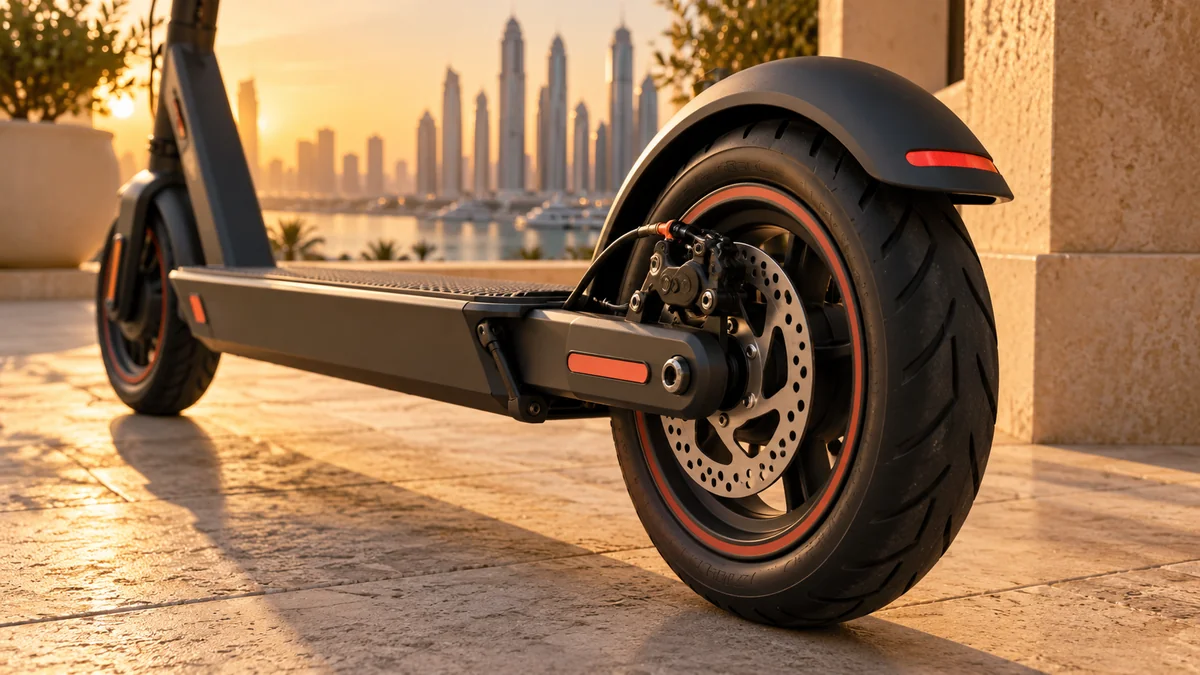
First identify whether the model uses a disc, drum or another mechanical brake, and whether it also has electronic braking. A disc-brake cleaning or adjustment tutorial may be irrelevant to a drum brake. Check the manual’s wear and inspection instructions; a generic pad-thickness number should not be transferred to an unrelated brake.
For disc systems, SRAM’s disc-brake troubleshooting guidance explains that moisture or dirt can cause temporary noise, while persistent noise can involve contamination or an unsuitable bedding-in result. This is general disc-brake context, not a scooter-specific repair procedure. Continued squealing, loss of stopping performance or a changed lever feel needs inspection.
Do not apply oil, grease or general-purpose lubricant to rotors or pads. Shimano’s mechanical disc-brake safety manual warns that contamination can impair braking. If lubricant has reached the braking surfaces, stop using the scooter and get the correct remedy for its components. Wiping the outside until the noise disappears does not prove the pads are safe.
Drum brakes need their own instructions
Do not dismantle a drum or apply a disc-brake procedure to it. For example, the Segway E2 Plus II product manual directs owners to customer support for loud drum-brake noise during braking, and includes checks for abnormal wheel and motor behaviour. Follow the manual supplied with your own regional model. Our scooter brake troubleshooting guide helps you describe the system before arranging service.
Rattling at the handlebars, stem or folding joint
Check the simple visible items first: a phone mount, bell, lock bracket or loose object in a bag. Remove an optional accessory only if you can do so without disturbing the brake controls, wiring or structural fasteners. If the sound disappears, inspect that accessory’s mount and compatibility before refitting it.
Movement in the stem, steering or folding joint is different. Close and secure the folding mechanism exactly as the manual specifies. If it still moves unexpectedly, stop riding. Do not add an improvised shim, over-tighten a latch or pack the joint with grease to make it quiet. These changes can disguise wear or prevent the latch from engaging properly.
Fasteners have model-specific tightening requirements. “Tighten everything hard” is not a maintenance instruction. If the correct torque, tool or locking method is unknown, ask a qualified service provider. A cracked part cannot be made reliable by tightening the bolts around it.
Scraping or clicking once per wheel rotation
A repeating sound can help locate contact between rotating and stationary parts. With the scooter off, look for a displaced fender, visible foreign material, tyre damage or a disc that appears to contact something. Keep fingers away from the rotor and moving gaps. Do not power the wheel while holding the scooter in the air.
Do not bend a brake rotor by hand, loosen an axle to experiment or cut material from a fender without manufacturer guidance. If the wheel does not roll normally, the cause must be resolved before riding. A tyre puncture or embedded object needs its own assessment; see our puncture and tyre-repair guide. Do not pull out an embedded object and then assume the tyre will hold pressure.
Grinding, rough bearings or a changed motor sound
Grinding is a reason to stop and arrange inspection. A recording may help a technician, but cannot establish whether the source is a bearing, brake, motor or something rubbing nearby. Note whether the sound happens during hand-rolling, braking or normal acceleration; do not reproduce it at speed for a video.
A familiar, steady motor sound is different from a new harsh noise accompanied by vibration, jerking, heat or warnings. There is no universal volume threshold that proves a motor is healthy. Report the change and the circumstances. Do not open the hub motor or inject lubricant through an opening in an attempt to quiet it.
Tyre pressure: an easy check with a narrow purpose
If the scooter has air-filled tyres, use a suitable gauge and the pressure specified for the exact model and load. Check when the tyres are cool, in line with the manual. Do not use the maximum sidewall marking as an automatic everyday target, and do not apply another scooter’s pressure because the wheel size looks similar.
As a model-specific example, the Xiaomi 4 Pro (2nd Gen) FAQ specifies 45–50 psi and recommends regular pressure checks. That figure is not a setting for every scooter. Solid tyres do not inflate; our air versus solid tyre comparison explains the difference. Correct pressure does not repair a grinding bearing, bent rotor or loose stem.
Optional tool: AstroAI cordless tyre inflator
Useful if you have air-filled tyres and need a convenient way to maintain their specified pressure. Check the seller’s exact model, hose clearance and valve compatibility before ordering. A suitable existing hand pump and gauge may already do the job.
- Good fit: routine pressure checks on compatible pneumatic tyres.
- Limit: not a repair for brake noise, structural play or a damaged tyre; unnecessary for solid tyres.
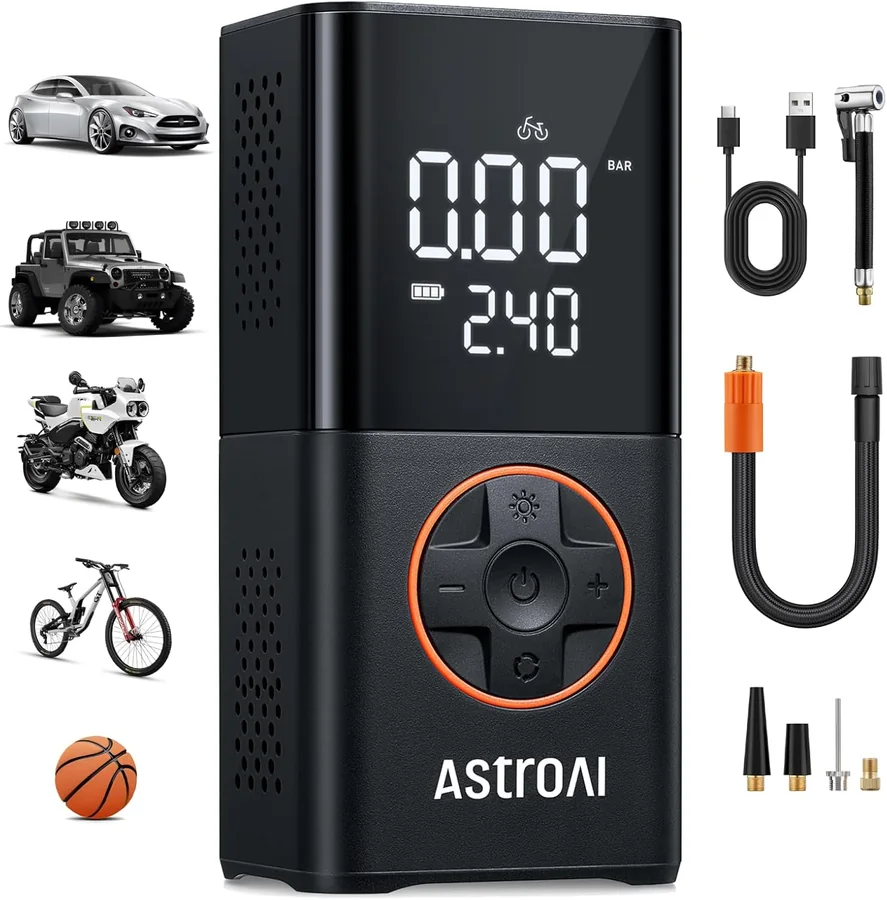
Compare the current seller, included fittings, delivery and warranty on Amazon.ae. No live price or stock is promised. Set pressure from your scooter manual, not from the product image.
After dust, rain or a wash: what to record
Tell the service provider whether the noise began after a dusty route, water exposure, washing, tyre work or brake adjustment. That history helps focus the inspection, but UAE weather alone does not identify a fault. Do not assume that every summer noise is heat damage or that a brief squeak is harmless because it happened after rain.
Use only the cleaning method allowed by the manufacturer. Avoid forcing water into bearings, brakes or electrical openings. If there has been possible water ingress, stop charging and follow the model’s guidance. A scooter that looks dry externally may still need inspection.
How to ask for a useful repair quote
- Give the full model and describe the sound without guessing the failed part.
- Say whether braking, steering, power or wheel movement has changed.
- Share a short stationary recording if it can be made safely.
- Ask for the diagnosed cause, exact replacement part and labour cost in writing.
- Confirm that the quote includes the relevant post-repair brake, wheel or folding checks.
Do not buy a brake kit, bearing or replacement motor solely because an online video sounds similar. Compatibility includes more than a matching diameter or connector. Use the diagnosis to decide whether repair is worthwhile; the Ride Finder comparison tool is a later option if replacement makes more sense.
Does the front of the scooter also feel loose? Stop riding and follow our safe checks for a loose stem or handlebars.
Frequently asked questions
Can I ride if the scooter only squeaks?
A sound alone cannot establish safety. Stop if braking, steering or wheel movement has changed, or if you find damage or play. If the cause remains unclear or the noise persists, have it inspected.
Should I spray WD-40 on a squeaky brake?
Do not put general-purpose lubricant on brake pads or rotors. It can contaminate the braking surfaces. Use only the maintenance products and procedures specified for the actual brake.
Will a factory reset stop a grinding noise?
No software reset can repair mechanical contact, a worn bearing or a loose joint. A beep from the dashboard is a different kind of symptom and should be checked against the model’s error information.
Can low tyre pressure cause every kind of noise?
No. Correct pressure is part of normal maintenance for pneumatic tyres, but it does not explain every scrape, rattle or grind. Investigate the actual location and associated symptoms.
How much will a noise repair cost in Dubai?
The price depends on the fault, scooter and replacement parts. Get a diagnosis and written quote; a universal price range would hide the difference between an accessory rattle and a safety-critical repair.
Bottom Line
Locate the pattern, check safely while stationary and treat changes in braking, steering or wheel movement seriously. Fixing a noise means resolving its cause. Accessories and lubricant should never be used to hide a fault that needs repair.